

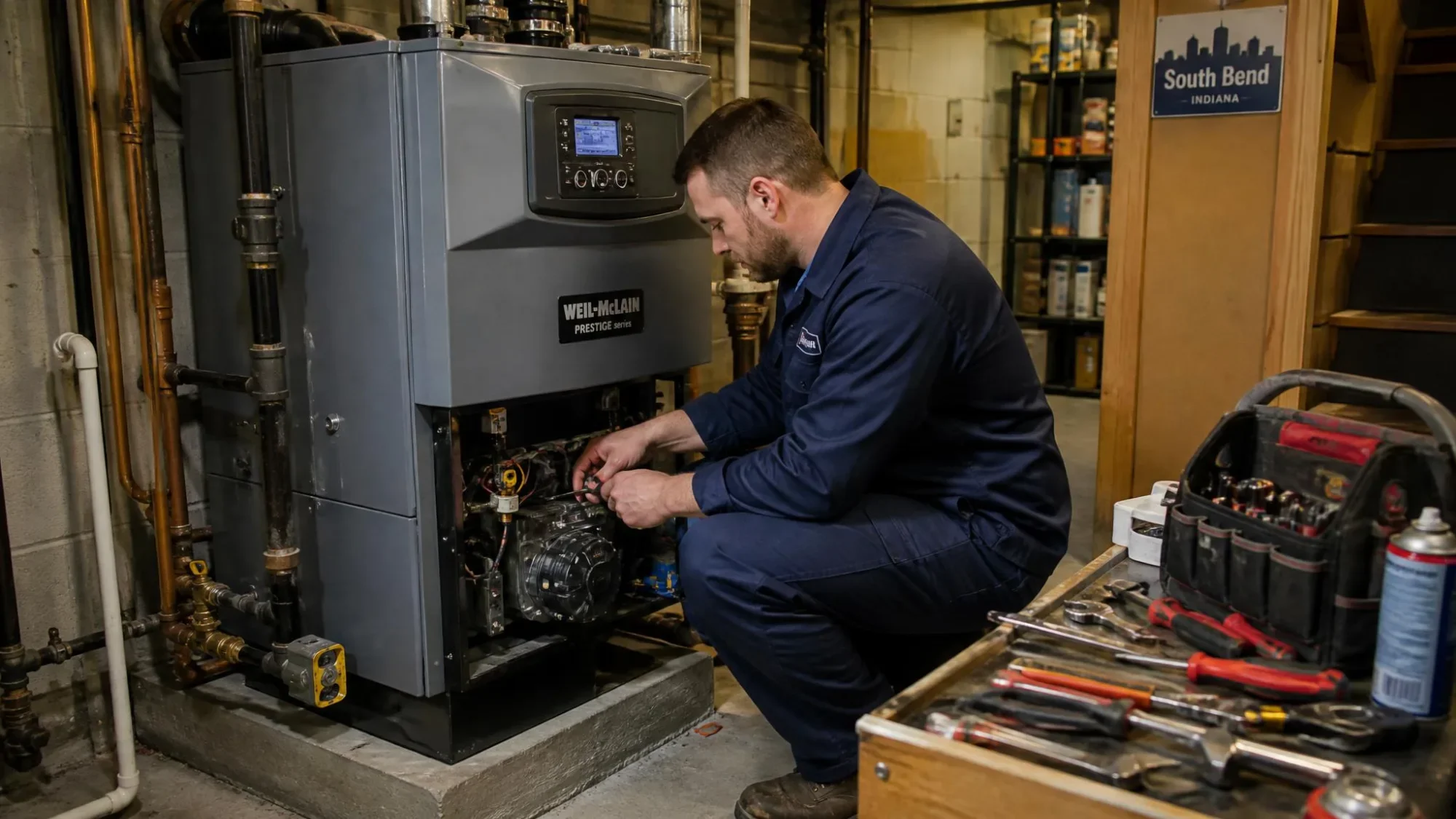
What's Involved in Boiler Repair and When Should You Call a Professional?
If you've got a boiler heating your home or business in South Bend, you already know how critical it is to keep it running — especially when Indiana winters decide to show up hard in January. But when something goes wrong, it's not always obvious whether you're dealing with a minor fix or a system that needs immediate professional attention.
Here's a straightforward breakdown of what boiler repair actually involves, the warning signs you shouldn't ignore, and when it's time to stop Googling and pick up the phone.
How a Boiler System Works (Quick Version)
Boilers heat water and distribute that heat through radiators, baseboard heaters, or radiant floor systems. Unlike forced-air furnaces, they don't blow air — they circulate hot water or steam. That makes them efficient and quiet, but it also means the failure points are different. Pressure, water chemistry, valves, pumps, and heat exchangers are all part of the equation.
Common Boiler Problems We See in South Bend
1. No Heat or Inconsistent Heat This is the most common call we get. The causes range from a failed thermostat to a broken circulator pump, low water pressure, or a pilot light that's gone out. Some of these are straightforward — others require a full diagnostic.
2. Strange Noises (Banging, Kettling, Gurgling) Kettling — that low rumbling sound — usually means limescale buildup on the heat exchanger. Gurgling often points to trapped air or low water pressure. Banging can indicate delayed ignition, which is a safety concern. None of these should be ignored.
3. Pressure Problems Your boiler needs to operate within a specific pressure range (typically 12–15 PSI when cold). Too low and it won't heat properly. Too high and you're looking at a potential safety issue. Pressure drops often point to a leak; pressure spikes can indicate a faulty expansion tank or pressure relief valve.
4. Leaks Water pooling around your boiler is never normal. Common leak sources include the pressure relief valve, pump seals, or corroded pipe fittings. Left alone, leaks can cause water damage and accelerate system failure.
5. Pilot Light or Ignition Issues If your boiler won't fire, the problem might be as simple as a tripped reset — or as involved as a failed ignition control board or faulty flame sensor. Modern boilers use electronic ignition, and diagnosing it correctly requires the right tools.
6. Radiators Not Heating Evenly One cold radiator usually means trapped air — a bleed is often all it takes. Multiple cold radiators, or cold spots within a single radiator, can point to circulation issues or sludge buildup in the system.
What Boiler Repair Actually Involves
When a technician comes out for a boiler repair in South Bend, the process typically includes:
- System diagnostic — checking error codes, pressure readings, temperature differentials, and component function
- Visual inspection — looking for leaks, corrosion, soot, or signs of incomplete combustion
- Component testing — circulator pump, expansion tank, pressure relief valve, gas valve, heat exchanger
- Repair or replacement — parts like pumps, valves, igniters, and thermocouples can often be swapped same-day; heat exchangers or control boards may require ordering
- System re-commissioning — filling, bleeding, and pressure-testing after the repair
A good technician doesn't just fix the symptom — they check the rest of the system to make sure you're not going to be calling again in two weeks.
When to Stop Troubleshooting and Call a Pro
Call immediately if you:
- Smell gas near your boiler
- See yellow or flickering flame instead of blue
- Notice black soot marks around the unit
- Have carbon monoxide detector going off
These are safety emergencies. Don't reset and hope — call a professional and ventilate the space.
Call soon if you:
- Have no heat and resetting hasn't helped
- Notice consistent pressure drops
- Hear persistent banging or kettling
- See active leaks
Boilers are pressurized systems that involve gas or oil combustion. DIY repairs beyond basic troubleshooting (checking your thermostat, bleeding a radiator, checking the pilot) are not worth the risk.
Serving South Bend and the Surrounding Area
Whether you've got an older cast-iron boiler or a modern high-efficiency condensing unit, our team handles boiler repair across South Bend, IN and the surrounding communities. We diagnose it right the first time and carry common parts on the truck to get your heat back on fast.
Don't wait out the cold. If your boiler is acting up, contact us today to schedule a diagnostic - before a minor issue turns into a full system replacement.