

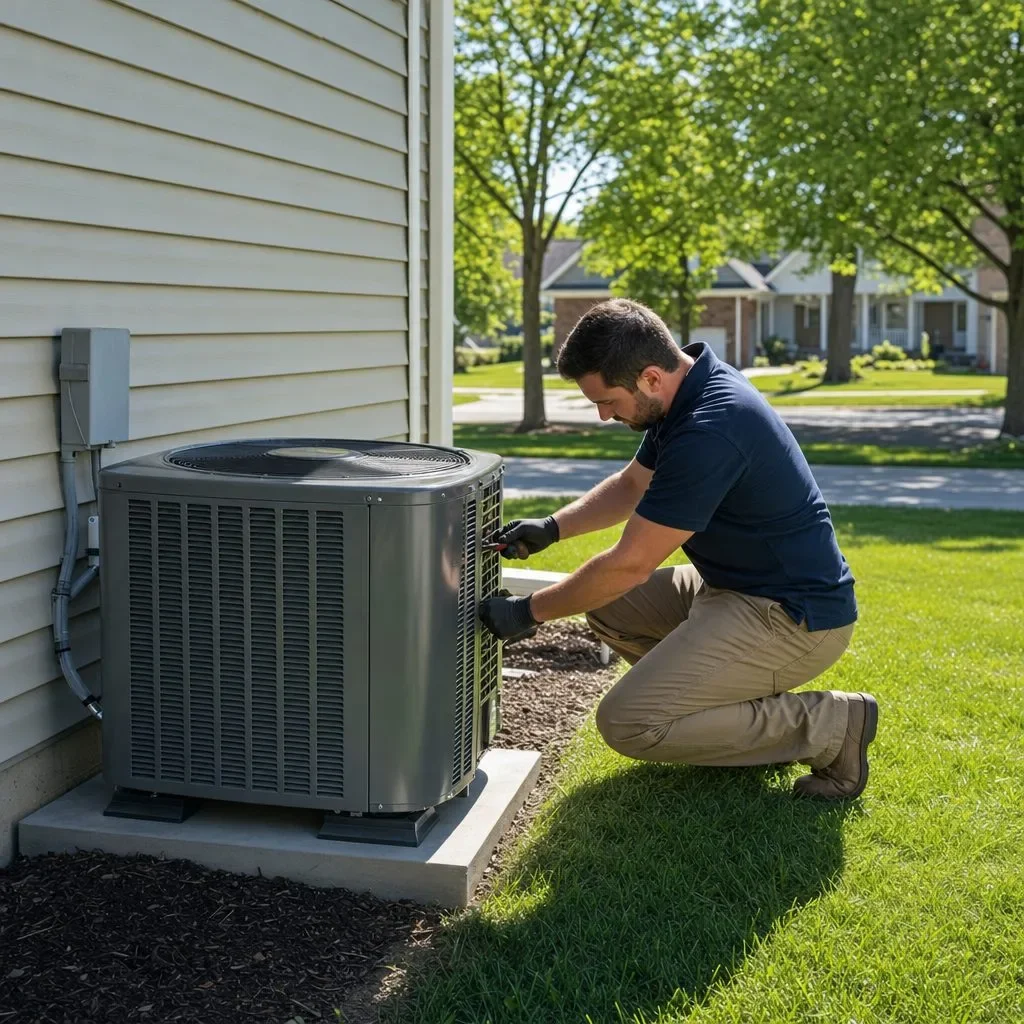
What Does Central Air Conditioning Installation Actually Involve?
If you've been relying on window units or just pushing through humid South Bend summers without AC, you've probably wondered what it actually takes to get central air installed. It's not as simple as dropping a unit outside and flipping a switch — but it's also not the mystery most homeowners think it is.
Here's a straightforward breakdown of what central air conditioning installation involves, so you know exactly what to expect before the crew shows up.
Step 1: Load Calculation and System Sizing
Before any equipment gets ordered, a proper installation starts with a Manual J load calculation. This determines how much cooling capacity your home actually needs based on:
- Square footage and ceiling height
- Insulation levels
- Window placement and size
- How many people live in the home
- Local climate conditions (yes, South Bend's humidity matters here)
Skipping this step is one of the most common mistakes homeowners encounter when going with the lowest bidder. An oversized system short-cycles — it cools too fast, shuts off, and never properly dehumidifies the air. An undersized system runs nonstop and still can't keep up on a hot July afternoon.
Step 2: Equipment Selection
Once sizing is done, it's time to select the right equipment. For most South Bend homes, a central AC system consists of:
- Outdoor condenser unit — houses the compressor and condenser coil
- Indoor air handler or evaporator coil — typically installed on top of your furnace
- Refrigerant lines — connect the two units
- Thermostat — controls the whole system
Efficiency ratings (SEER2) matter here. Higher SEER2 = lower energy bills over time. For Indiana's climate, a 16–18 SEER2 system is usually the sweet spot between upfront cost and long-term savings.
Step 3: Ductwork Assessment
If your home already has ductwork from an existing furnace, it may work for central air — but it needs to be inspected first. Leaky, undersized, or poorly routed ducts can gut your system's efficiency before it ever runs a full cycle.
If your home doesn't have existing ductwork, installation will involve running new ducts — which adds time and cost but is absolutely worth it compared to struggling with inadequate airflow.
Step 4: The Installation Day
Here's what a typical installation day looks like:
- Outdoor unit placement — The condenser gets set on a concrete pad or composite riser outside your home, positioned for proper airflow and code clearances.
- Indoor coil installation — The evaporator coil is mounted above your furnace in the air handler cabinet.
- Refrigerant line set — Copper lines run between the indoor and outdoor units, properly insulated and secured.
- Electrical connections — A dedicated circuit is run from your panel to the outdoor unit. This is permit-required work.
- Condensate drain — The system produces moisture; that water needs somewhere to go.
- System charge and startup — The technician pressurizes the system, checks for leaks, then charges it with refrigerant to manufacturer spec.
- Thermostat setup and testing — Final calibration, airflow checks, and a full test run.
A straightforward installation on a home with existing ductwork typically takes one full day. More complex jobs — new ductwork, panel upgrades, tight attic runs — may take two.
What About Permits?
In South Bend, IN, HVAC installations require a mechanical permit. Any reputable contractor will pull this for you — if someone says permits aren't necessary, that's a red flag. Permitted work gets inspected, which protects you as the homeowner and keeps your warranty valid.
What to Ask Before You Hire
Not all HVAC contractors are the same. Before you sign anything, ask:
- Do you do a Manual J load calculation, or are you sizing by square footage alone?
- Will you inspect my existing ductwork?
- Do you pull permits?
- What brand and efficiency rating are you recommending, and why?
The answers tell you a lot about who you're actually dealing with.
Ready to Get Central Air in South Bend?
Central air conditioning installation is one of the best home comfort investments you can make — especially heading into another Indiana summer. Whether you're replacing an old system or installing AC for the first time, the process goes smoothly when you work with someone who takes the time to do it right.
Contact us today to schedule a home assessment and get a quote on central air conditioning installation in South Bend, IN. We'll size it right, pull the permits, and make sure it's running perfectly before we leave.