

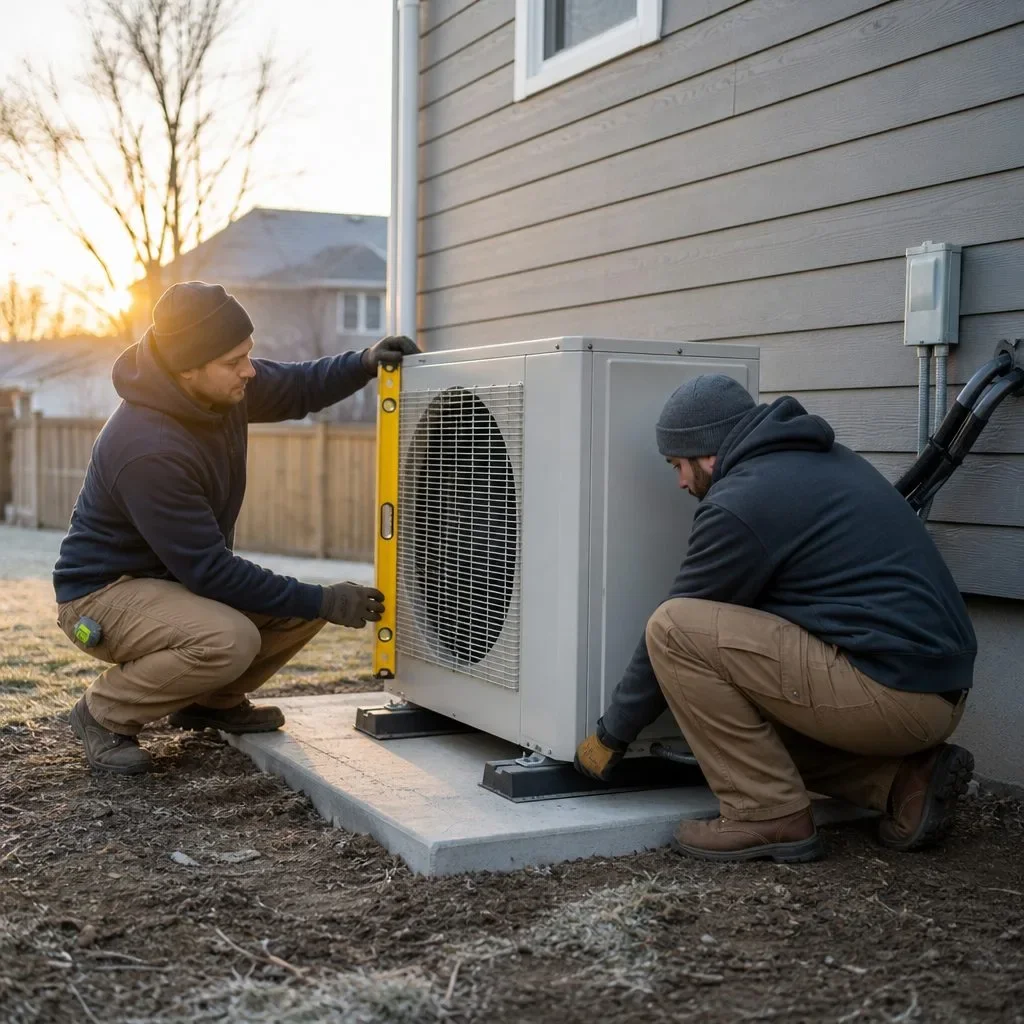
If you've started shopping for a new heat pump in South Bend, you've probably noticed the quotes are all over the place. One company says $4,500. Another says $11,000. A neighbor mentions they paid $8,200 last year. None of these numbers are wrong — they're just answering different questions.
Heat pump installation cost depends on more variables than almost any other home system purchase, which is exactly why it's so hard to pin down a single number online. Let's break down what actually drives the price, so you can tell whether a quote is fair before you sign anything.
The Short Answer
Most homeowners in South Bend pay somewhere between $4,500 and $12,000 for a full heat pump installation, with the bulk of jobs landing in the $6,500–$9,000 range. That's a wide spread, and the reason comes down to three things: the size of your home, the type of heat pump, and what's already in place (or not) from your old system.
A simple swap — replacing an existing heat pump with a similar-sized unit using the same ductwork, electrical, and pad — sits at the low end. A full new install in a home that's never had a heat pump, especially one needing electrical panel upgrades or ductwork modifications, climbs toward the top.
What's Actually Driving the Price
Unit Size and Capacity
Heat pumps are sized in tons (a measure of cooling/heating capacity, not weight), typically ranging from 1.5 to 5 tons for residential homes. A 1,200 sq ft home might only need a 2-ton unit, while a 2,800 sq ft home could require 3.5 to 4 tons. Bigger capacity means a higher equipment cost, plain and simple.
Undersizing is cheaper upfront but leads to a system that runs constantly and never quite keeps up on the coldest days. Oversizing wastes money and causes short-cycling, which wears out components faster. This is why a proper load calculation — not a guess based on square footage alone — matters more than most people realize.
Ducted vs. Ductless (Mini-Split)
If your home already has functional, well-sized ductwork, a traditional ducted heat pump is usually the more economical path. If you're in an older South Bend home with no ducts, or you're conditioning an addition, garage, or finished basement, a ductless mini split installation often ends up cheaper than cutting in new ductwork — even though the per-unit equipment cost can look higher on paper.
Efficiency Rating (SEER2 / HSPF2)
Higher-efficiency units cost more to purchase but less to run. A standard 14–15 SEER2 heat pump will install cheaper than an 18+ SEER2 variable-speed system. For most South Bend homes, the mid-efficiency range offers the best payback period — the ultra-high-efficiency units make more sense for homes with high usage or specific utility rebate programs in play.
Electrical and Site Conditions
This is the line item that surprises people most. If your electrical panel can't support the new unit's amperage draw, you're looking at an upgrade before installation can even begin. Likewise, if the old condenser pad is cracked, undersized, or in the wrong location for airflow clearance, that's additional labor and material.
Removal and Disposal of Old Equipment
Pulling out an old furnace, window units, or a failed heat pump and disposing of the refrigerant properly (EPA regulations require certified handling) adds a modest but real cost that's easy to overlook when comparing quotes.
Heat Pump vs. Furnace: A Cost Consideration
If you're weighing a heat pump against a traditional gas furnace replacement, the upfront cost comparison isn't the whole story. Heat pumps handle both heating and cooling in one system, so you're not paying for a furnace and a separate AC unit. Our breakdown on heat pump vs furnace digs into how these systems perform differently in Northern Indiana's cold snaps, which matters more here than it does in milder climates.
Why Quotes Vary So Much Between Companies
Two contractors can look at the same house and hand you wildly different numbers — and it's not always because one is overcharging. Differences show up in:
- Brand and equipment tier quoted
- Whether a proper Manual J load calculation was performed or skipped
- Labor warranty length included
- Whether electrical/ductwork modifications were scoped upfront or left as a surprise change order later
A lower number isn't automatically a better deal if it's missing line items that show up as "unexpected" costs mid-install. This is part of what makes is heat pump installation worth it in our climate a more nuanced question than it first appears — the install quality affects the payback math as much as the sticker price.
What a Fair Quote Should Include
Before comparing numbers side by side, make sure each quote spells out:
- Exact unit model, tonnage, and efficiency rating
- Labor warranty duration (separate from manufacturer parts warranty)
- Whether a load calculation was performed
- Any electrical, ductwork, or pad work included or excluded
- Old equipment removal and disposal
- Permit costs, if applicable in your township
If a quote is missing most of these details, it's worth asking before assuming it's the better deal.
Getting an Accurate Number for Your Home
Ballpark ranges are useful for budgeting, but the only way to know your actual heat pump installation cost is a proper in-home assessment. Square footage, insulation quality, existing ductwork condition, and your home's electrical setup all factor into the real number — and those details don't show up in a phone estimate.
If you're ready to get a precise quote for your South Bend home, contact Goff Heating & Plumbing for a free, no-pressure assessment. We'll walk through your home, run the actual load calculation, and give you a number you can trust — not a guess.