

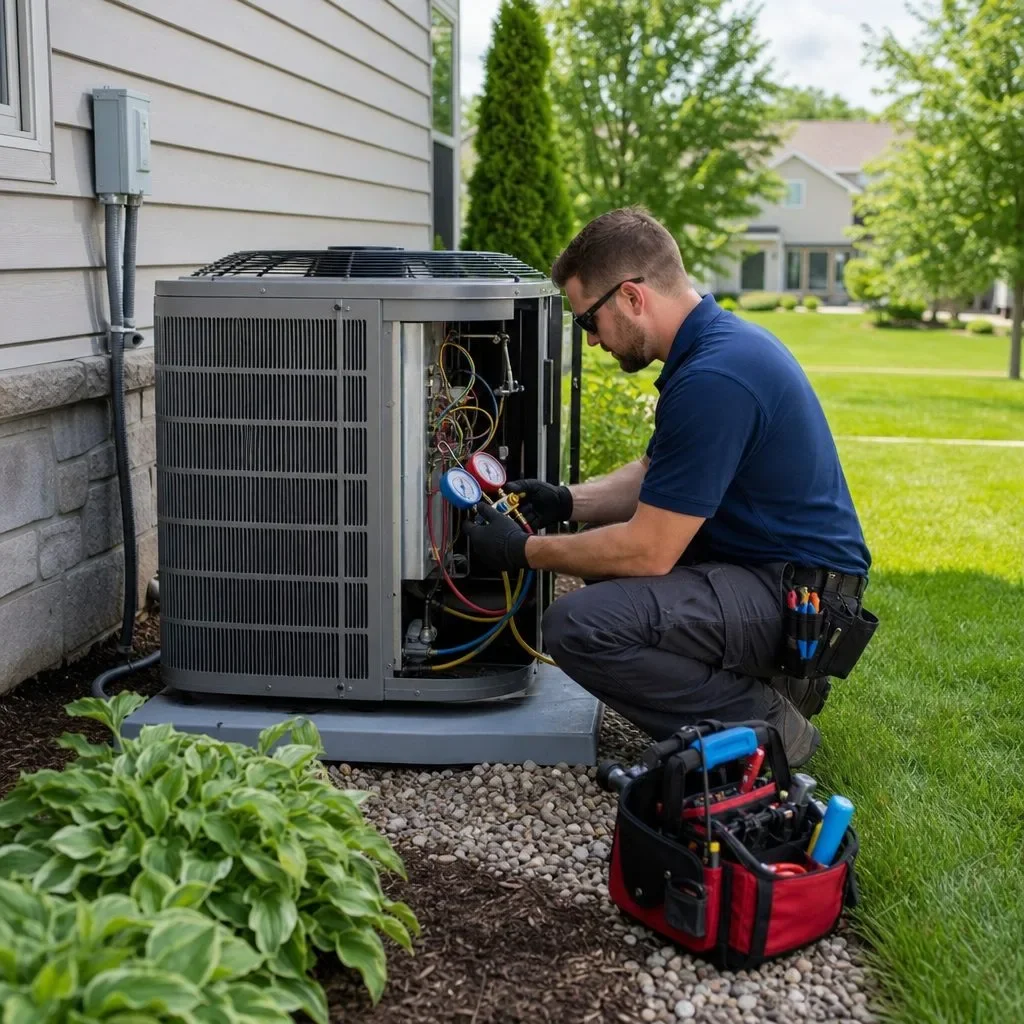
The Short Answer: Once a Year, Every Year
If you take nothing else from this post, take this — your air conditioner should be professionally serviced once a year, ideally in the spring before cooling season kicks off. That's the industry standard, and it's the baseline every HVAC tech will give you.
But like most things, the full answer is a little more nuanced depending on your system, your home, and how hard your AC actually works.
Why Annual AC Service Isn't Optional
Indiana summers don't mess around. From late May through September, your AC runs hard — sometimes around the clock during heat waves. A system that hasn't been serviced is working harder than it needs to, costs more to run, and is far more likely to fail on the hottest day of the year.
Here's what a professional tune-up actually does:
- Checks refrigerant levels — low refrigerant means poor cooling and compressor strain
- Cleans the coils — dirty evaporator and condenser coils kill efficiency fast
- Inspects electrical components — catches failing capacitors and contactors before they leave you stranded
- Lubricates moving parts — reduces wear on the blower motor and fan
- Clears the condensate drain — prevents water damage and mold inside your air handler
- Tests system performance — confirms your unit is hitting proper temperature differentials
Skipping this doesn't save money. It accelerates wear, increases energy bills, and turns small problems into expensive repairs.
When You Might Need Service More Than Once a Year
Once a year is the floor, not the ceiling. There are situations where more frequent service makes sense:
Older systems (10+ years): Aging equipment needs closer attention. If your unit is pushing 12–15 years, consider twice-a-year inspections to stay ahead of failure points.
High-usage households: Running your AC 24/7 from May through October puts more cycles on the system than a home that runs it conservatively. More runtime = more wear.
Homes with pets: Pet dander clogs filters and coils faster. You may need filter changes every 30–45 days and more frequent coil cleaning.
Allergy or asthma households: Indoor air quality matters. More frequent filter swaps and coil cleanings help keep particulates down.
Systems that had repairs: If your AC had a refrigerant leak, a failed capacitor, or any major repair, schedule a follow-up inspection before the next heavy-use season.
What You Can Do Between Service Visits
Professional maintenance once a year doesn't mean you ignore the system the rest of the time. A few simple habits keep things running clean:
- Change your filter every 1–3 months depending on filter type and household conditions — this is the single highest-impact thing a homeowner can do
- Keep the outdoor unit clear — trim back vegetation 2 feet on all sides and don't stack anything against it
- Listen for new sounds — rattling, grinding, or clicking that wasn't there before is your system talking
- Check that airflow is consistent — weak airflow from vents often means a dirty filter, blocked duct, or failing blower
- Watch your energy bills — a sudden spike in cooling costs with no change in usage often points to a refrigerant or efficiency issue
The Best Time to Schedule in Indiana
Spring is the window — March through early May. You beat the summer rush, your tech has flexibility to spend time on your system, and you're not scrambling when temps hit 95°.
By June, most HVAC companies in Indiana are slammed. Wait lists get long, and emergency calls get prioritized. Getting on the schedule early in the year means you're covered before the heat arrives.
Don't Wait for a Problem to Call
The biggest mistake Indiana homeowners make is treating AC service like a reactive thing — something you do when it breaks. Preventive maintenance is almost always cheaper than repair, and it dramatically extends the useful life of your system.
A well-maintained central AC should last 15–20 years. A neglected one? Often 10–12. That's a $5,000–$10,000 difference in replacement cost over the life of your home.
Ready to get your AC serviced before summer hits hard? Give us a call or schedule online — we'll make sure your system is dialed in and ready to handle whatever Indiana throws at it.