

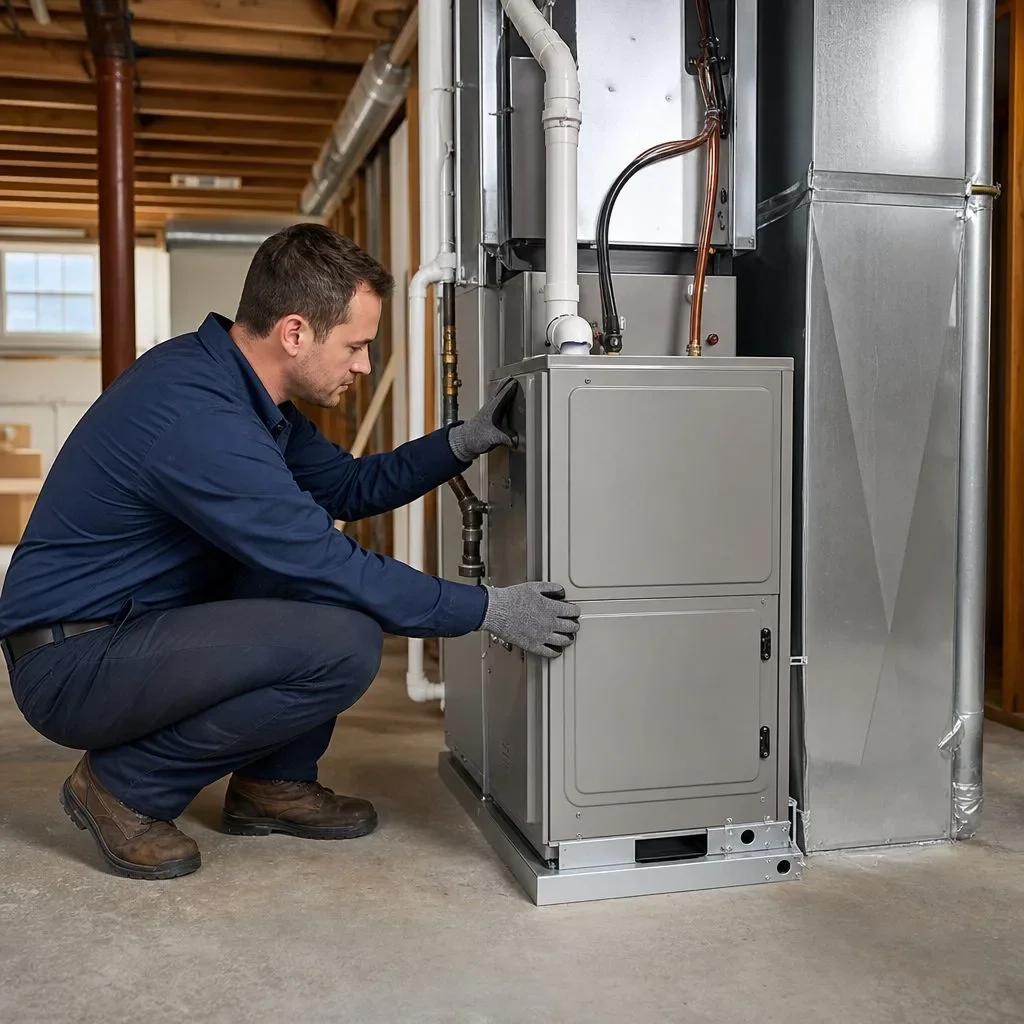
What Should Be Included in a Residential Furnace Installation?
If you're planning a residential furnace installation in South Bend, IN, knowing what the process actually involves can save you from surprises — and help you spot contractors who cut corners. A complete furnace installation isn't just dropping a new unit in the basement. It's a multi-step process that protects your home, your wallet, and your family's comfort through every Michiana winter.
Here's what a proper residential furnace installation should include from start to finish.
A Thorough Home Assessment First
Before any equipment gets ordered or installed, a qualified technician should evaluate your home. This includes:
- Load calculation (Manual J): Sizing a furnace isn't guesswork. An accurate heat load calculation determines the right BTU output for your square footage, insulation levels, window placement, and local climate. In South Bend, where winters regularly push below 10°F, proper sizing is critical.
- Ductwork inspection: Existing ducts need to be checked for leaks, blockages, or improper sizing. A powerful new furnace hooked to leaky ducts is money straight out the window.
- Venting evaluation: Whether you're switching to a high-efficiency condensing furnace or staying with a standard unit, venting requirements change. Your installer should assess what's already there.
Skipping this step is a red flag. If a contractor quotes you over the phone without ever seeing your home, move on.
Proper Equipment Selection
Once the assessment is done, the right furnace gets selected — not just whatever's in stock. Key factors include:
- AFUE rating: Annual Fuel Utilization Efficiency. Higher-efficiency units (90%+ AFUE) cost more upfront but significantly reduce heating bills. For South Bend homes that run their furnaces 5–6 months a year, the payback period matters.
- Variable-speed vs. single-stage: Variable-speed blowers run more quietly, distribute heat more evenly, and improve air quality. They're worth considering if long-term comfort is the goal.
- Brand and warranty: Equipment warranty matters, but so does the installation warranty. Both should be documented in writing.
What Happens During the Installation
A complete residential furnace installation typically involves:
1. Safe Removal of the Old Unit
The old furnace gets disconnected from gas, electrical, and venting systems. Refrigerant and disposal requirements are handled per code.
2. Gas Line Inspection and Connection
The gas supply line is inspected for proper sizing and condition. The new furnace is connected and pressure-tested before any ignition.
3. Electrical Wiring
New furnaces require proper low-voltage thermostat wiring and line-voltage connections. This should be done to code with correct breaker sizing.
4. Venting Installation
High-efficiency furnaces vent through PVC pipes, not traditional flues. If you're upgrading from a standard unit, new venting gets run — typically through a side wall. This is not optional and not something to defer.
5. Duct Connections and Sealing
Supply and return connections are made, sealed, and tested for airflow. No open joints, no tape-only fixes.
6. Thermostat Setup
Your thermostat — whether a basic model or a smart unit like an Ecobee or Nest — gets configured and tested for proper staging.
System Testing and Commissioning
Before the technician leaves, the system should be fully commissioned:
- Combustion analysis: Verifies the burner is operating safely and efficiently
- Static pressure testing: Confirms airflow is within design range
- Carbon monoxide check: Every gas appliance installation should include a CO test
- Full heat cycle run: The system runs through a complete heating cycle while the tech observes operation
If your installer wraps up in under an hour without testing anything, that's a problem.
Documentation You Should Receive
At job completion, you should walk away with:
- Manufacturer's warranty registration (or confirmation the contractor filed it)
- Installation permit (required in most Indiana municipalities)
- Equipment model and serial numbers
- Written invoice with parts and labor itemized
Ready for a Residential Furnace Installation in South Bend, IN?
Goff Heating & Plumbing brings the full process — assessment, proper sizing, professional installation, and complete commissioning — to every job in South Bend and the surrounding area. No shortcuts, no guesswork.
Call us or request a quote online today. Let's make sure your home is ready before winter hits.