

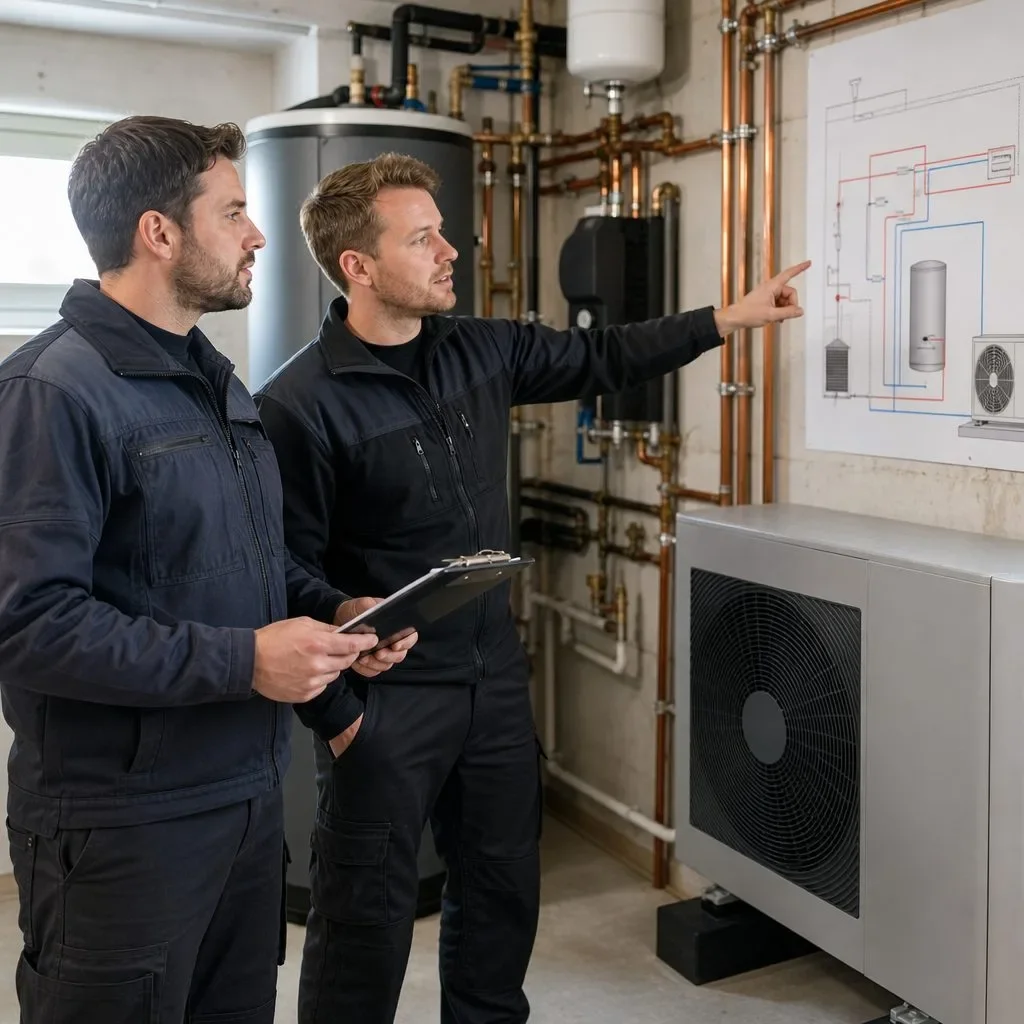
A heat pump is a single system that both heats and cools your home by transferring heat rather than burning fuel or using electric resistance to create it. In the winter, it pulls heat from the outside air (even cold air) and moves it indoors. In the summer, it reverses the process, pulling heat out of your home the same way an air conditioner does. That's the short answer. The longer answer is why that distinction actually matters for a home in a climate like ours.
For South Bend homeowners used to a furnace-and-AC setup, a heat pump can feel like a foreign concept. But it's one of the fastest-growing heating and cooling choices in Indiana, largely because it replaces two separate systems with one.
How a Heat Pump Actually Works
Every heat pump runs on the same basic principle: heat always moves from warmer areas to cooler ones unless something forces it the other direction. A heat pump is that "something." It uses a refrigerant cycle, a compressor, and a reversing valve to move heat energy from one place to another instead of generating new heat through combustion.
In heating mode, the outdoor unit extracts latent heat from the outside air, even when it's cold outside, and compresses it to raise the temperature before sending it indoors. In cooling mode, the reversing valve flips the cycle, and the system pulls heat from inside your home and releases it outside, functioning exactly like a central air conditioner.
This is the core reason heat pumps are more efficient than furnaces for a large portion of the year. A gas furnace creates heat by burning fuel. A heat pump just relocates heat that already exists. Moving energy takes less energy than creating it, which is why heat pump efficiency ratings (measured in HSPF for heating and SEER for cooling) consistently outperform traditional furnace-and-AC combinations in moderate climates.
Does a Heat Pump Work in South Bend's Climate?
This is the question we get the most, and it's a fair one. South Bend sees real winters, with average January lows dropping into the low 20s and occasional stretches well below freezing. Older heat pump technology struggled once outdoor temperatures dropped much past 30-35°F, which is part of why heat pumps earned a reputation in northern Indiana as a "mild climate only" solution.
That reputation is outdated. Modern heat pump installation uses cold-climate rated equipment that maintains strong efficiency well below freezing, with many systems rated to operate effectively down into single digits. The technology improved significantly over the last decade specifically to address the northern Indiana and Great Lakes climate zone, where winters are cold but not Minnesota-cold.
That said, most heat pump systems installed in our area are paired with a backup heat source, often called a dual-fuel or hybrid system, that kicks in during the coldest stretches of the year. The heat pump handles the bulk of the heating season efficiently, and the backup furnace covers the handful of extreme-cold days when a furnace is simply the more efficient tool for the job. If you're trying to decide between the two approaches entirely, our breakdown on heat pump vs furnace walks through the cost and performance tradeoffs in more detail.
If you're weighing whether a heat pump makes sense for your specific home, book a load calculation with our team — schedule a free assessment here and we'll walk through your home's heating history, ductwork, and insulation before recommending a system size.
Types of Heat Pumps You'll See in Northern Indiana Homes
Not every heat pump looks the same, and the type matters for what kind of home it fits.
Air-source heat pumps are the most common and most affordable option. They look similar to a standard AC condenser outside the home and connect to existing ductwork. This is the system most South Bend homeowners switching from a furnace-and-AC setup will install.
Ductless mini-split heat pumps skip ductwork entirely, using individual indoor wall units connected to an outdoor compressor. These work well for additions, older homes without existing ductwork, garages converted to living space, or homes where extending ducts isn't practical. If you're considering this route, our guide on ductless mini split installation covers when this option makes more sense than a ducted system.
Geothermal (ground-source) heat pumps pull heat from the ground instead of the air, which stays at a stable temperature year-round regardless of outdoor conditions. These are significantly more efficient in extreme cold but carry a higher upfront installation cost due to the underground loop system required.
For most South Bend homes with existing ductwork, an air-source or dual-fuel hybrid system is the practical starting point. Homes in older neighborhoods with original 1950s-60s ductwork sometimes need duct modifications alongside the heat pump installation, which is worth factoring into your budget conversation upfront.
What a Heat Pump Costs to Run vs. a Furnace
Because a heat pump moves heat instead of creating it, the operating cost advantage shows up most clearly during mild-to-moderate weather, which in South Bend covers a large portion of the heating season, not just a few shoulder-season weeks. Many homeowners see a meaningful drop in their heating bills during fall and early winter, with the system working hardest (and the efficiency advantage narrowing) only during the coldest weeks of January and February.
Upfront installation cost for a heat pump typically runs higher than a standard furnace alone, since you're installing a system that handles both heating and cooling in one unit. Over a 10-15 year equipment lifespan, the combined efficiency savings and single-system simplicity often offset that difference, especially for homeowners who would have needed to replace an aging AC unit anyway.
Frequently Asked Questions
How long do heat pumps last? Most heat pumps last 15 years on average, with well-maintained systems reaching closer to 20 years. Regular maintenance, particularly keeping the outdoor coil clean and refrigerant levels correct, has the biggest impact on lifespan.
Can a heat pump replace my furnace completely? In many South Bend homes, yes, especially with a modern cold-climate rated system. Some homeowners choose a dual-fuel setup that keeps a furnace as backup for the coldest days, which protects against extreme-weather performance dips while still capturing most of the efficiency benefit.
Is a heat pump more expensive to install than a furnace? Generally yes, since one system is replacing both a furnace and an AC unit. When you compare it against replacing a furnace and AC separately, the total cost difference narrows considerably.
Do heat pumps work well in cold weather? Modern cold-climate heat pumps maintain solid performance well below freezing. Efficiency does decrease as temperatures drop, which is why pairing with backup heat is common in our climate rather than a dealbreaker for using a heat pump at all.
What maintenance does a heat pump need? Heat pumps need the same seasonal attention as a furnace and AC combined, since they're doing both jobs. That includes filter changes, coil cleaning, refrigerant checks, and a pre-season inspection before both summer and winter.
Will a heat pump raise my electric bill? It shifts more of your heating cost to electricity and away from gas, but because it's moving heat rather than generating it, most homeowners see a net reduction in total energy spend compared to a standard electric furnace, and often compared to gas heating during moderate weather too.
How do I know if my home is a good fit for a heat pump? The best way to know is a proper load calculation that accounts for your home's size, insulation, ductwork condition, and current heating setup. This isn't a guess you make from square footage alone.
Is a Heat Pump Right for Your Home?
A heat pump isn't a universal replacement for every furnace in South Bend, but for a large share of homes it's a genuinely better long-term fit, more efficient, simpler to maintain as one system instead of two, and increasingly well-suited to our actual winters, not the winters people assume we have. The right call depends on your home's ductwork, insulation, and how your household uses heating and cooling throughout the year.
If you're ready to find out whether a heat pump makes sense for your home, get in touch with our team for a straightforward assessment, no pressure, just real numbers for your specific house.